21 June 1621
The Old Town Square execution
Seven months after the White Mountain, twenty-seven leaders of the Bohemian revolt died on a scaffold before the Old Town Hall. It took five hours, and it was meant to be remembered.
Place: Old Town Square, PragueEra: The Thirty Years' War
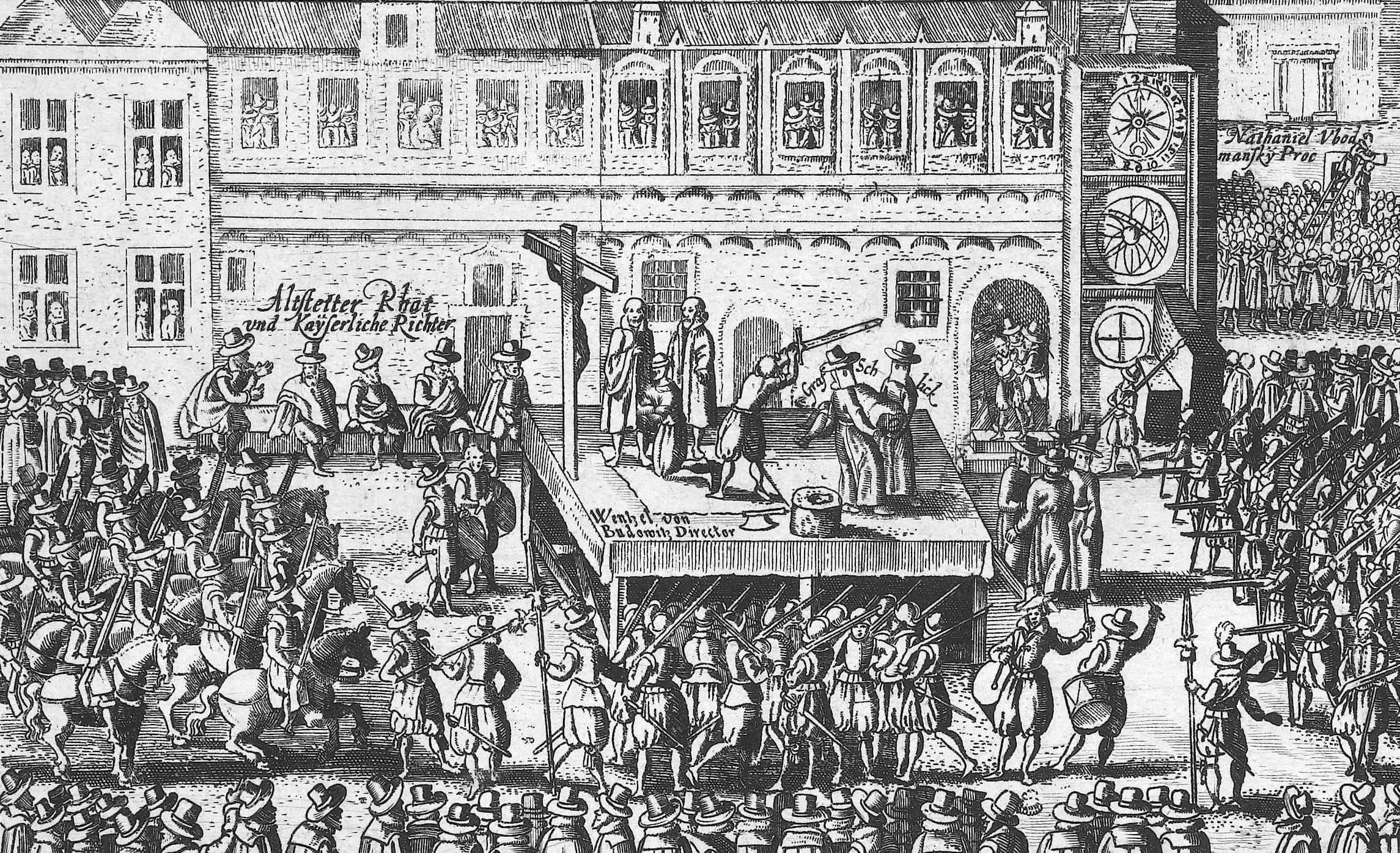
On the night of 20 June 1621 the gates of Prague were shut and imperial soldiers took the Old Town Square. Before the town hall stood a scaffold, hung with black cloth. At five in the morning the first of the condemned was led up to it.
How it came to this
Three years earlier the Protestant estates of Bohemia had thrown two of the emperor’s governors from a window of the castle and set up a government of their own: thirty directors, then a king of their own choosing, Frederick of the Palatinate. On 8 November 1620 their army was beaten in under two hours at the White Mountain, west of the city. Frederick fled. The emperor, Ferdinand II, now had to decide what to do with the men who had led the revolt.
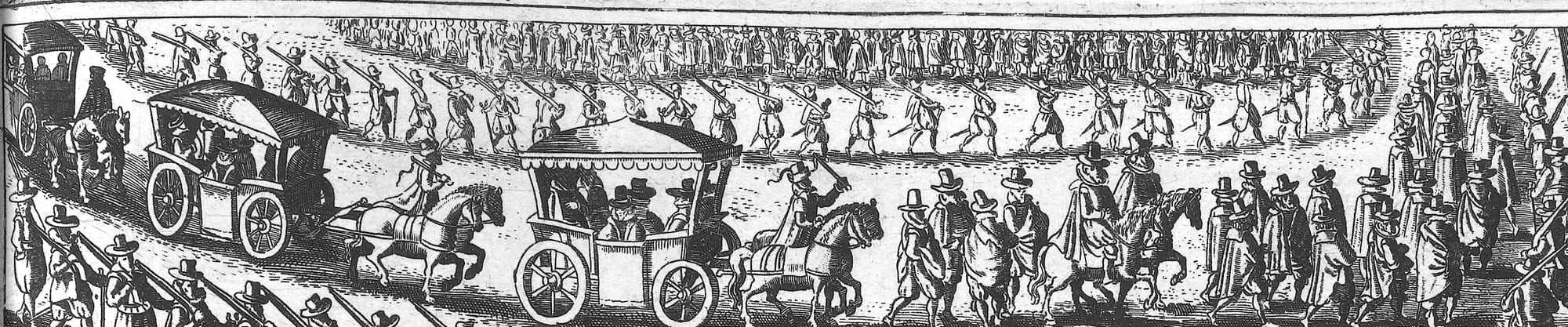
In February 1621 they were arrested. A court sat through the spring and sentenced thirty of them; Ferdinand confirmed most of the sentences and softened a few. On 19 June the sentences were read.
The morning
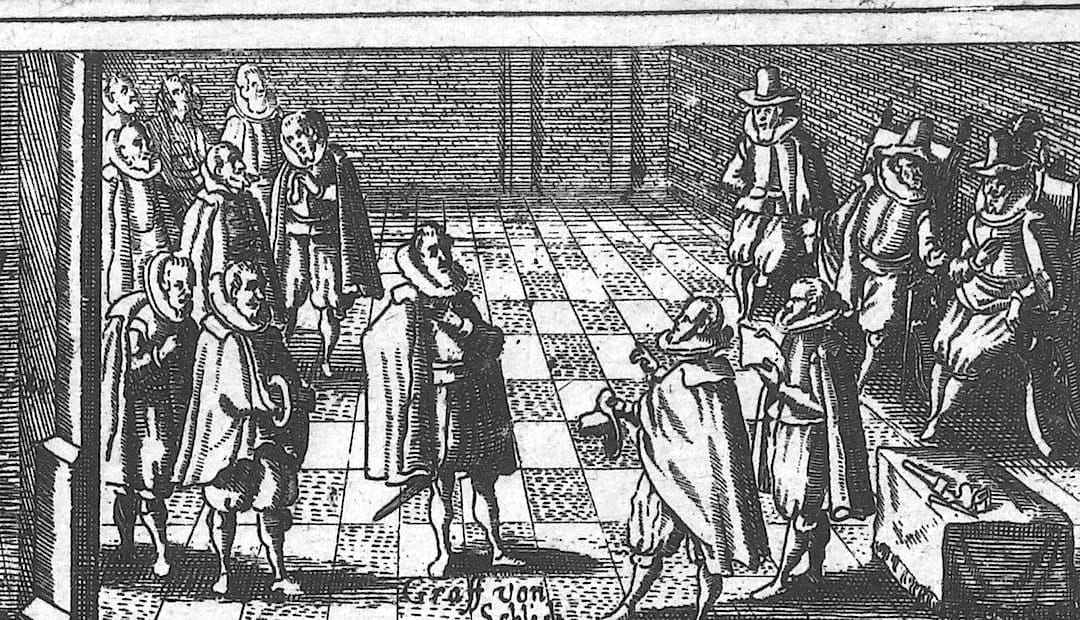
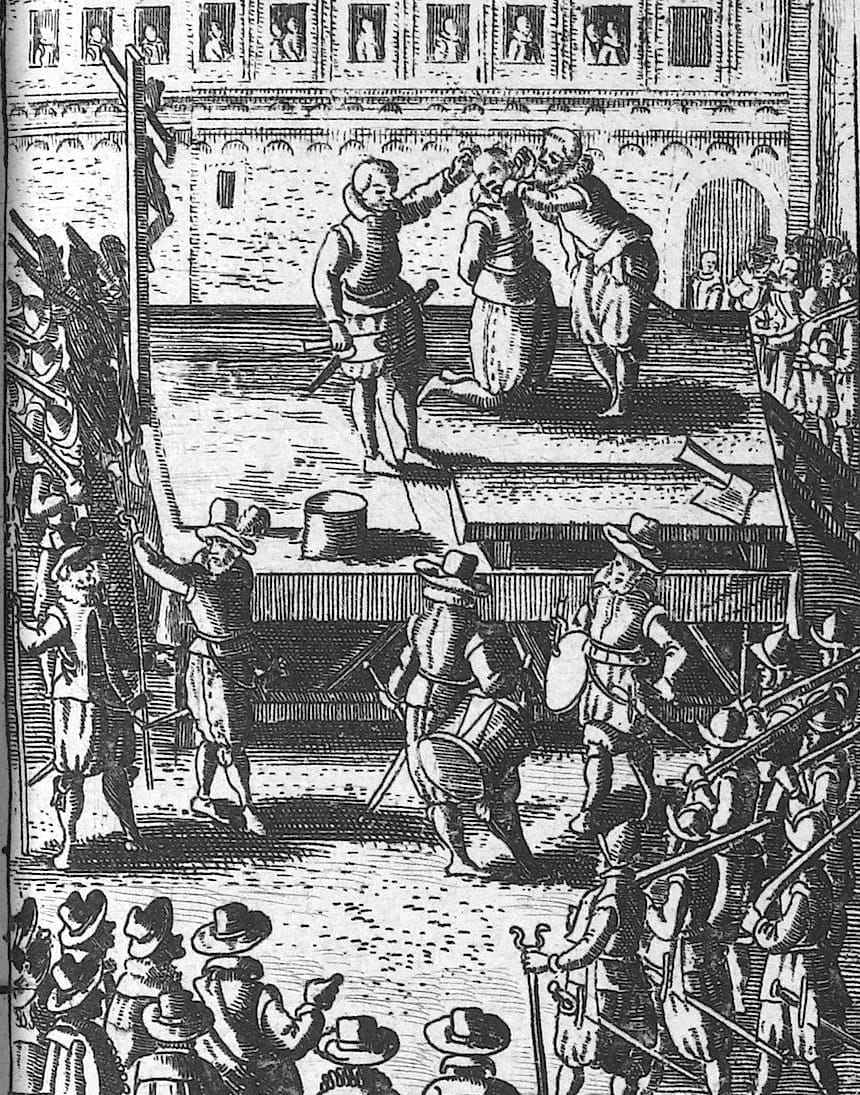
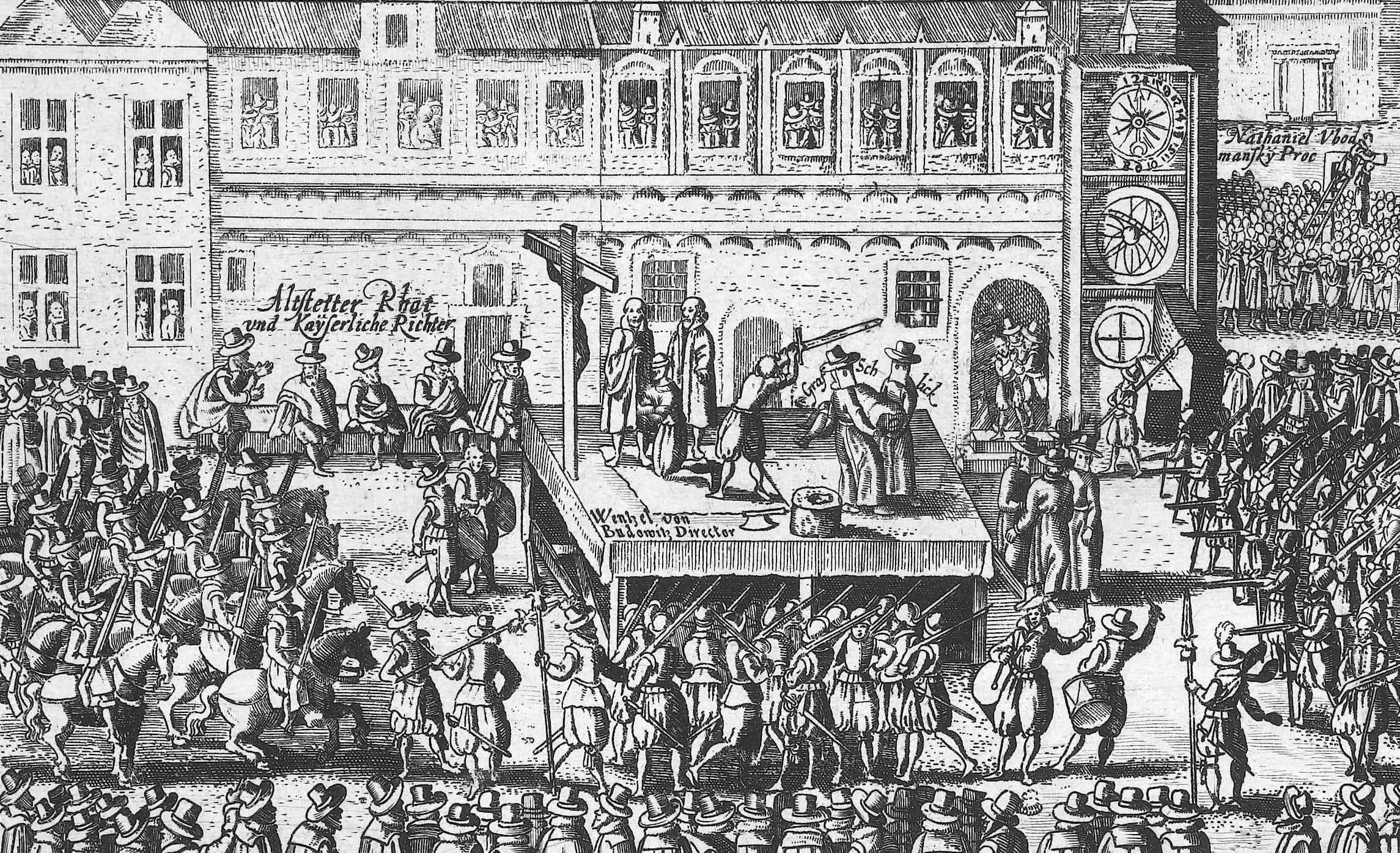
Count Joachim Andreas Schlick went first. Then the lords, the knights and the burghers came up one by one, by rank and age. The executioner, Jan Mydlář, had four swords ready. Drums and trumpets played the whole time, so the crowd would not hear what the condemned said.
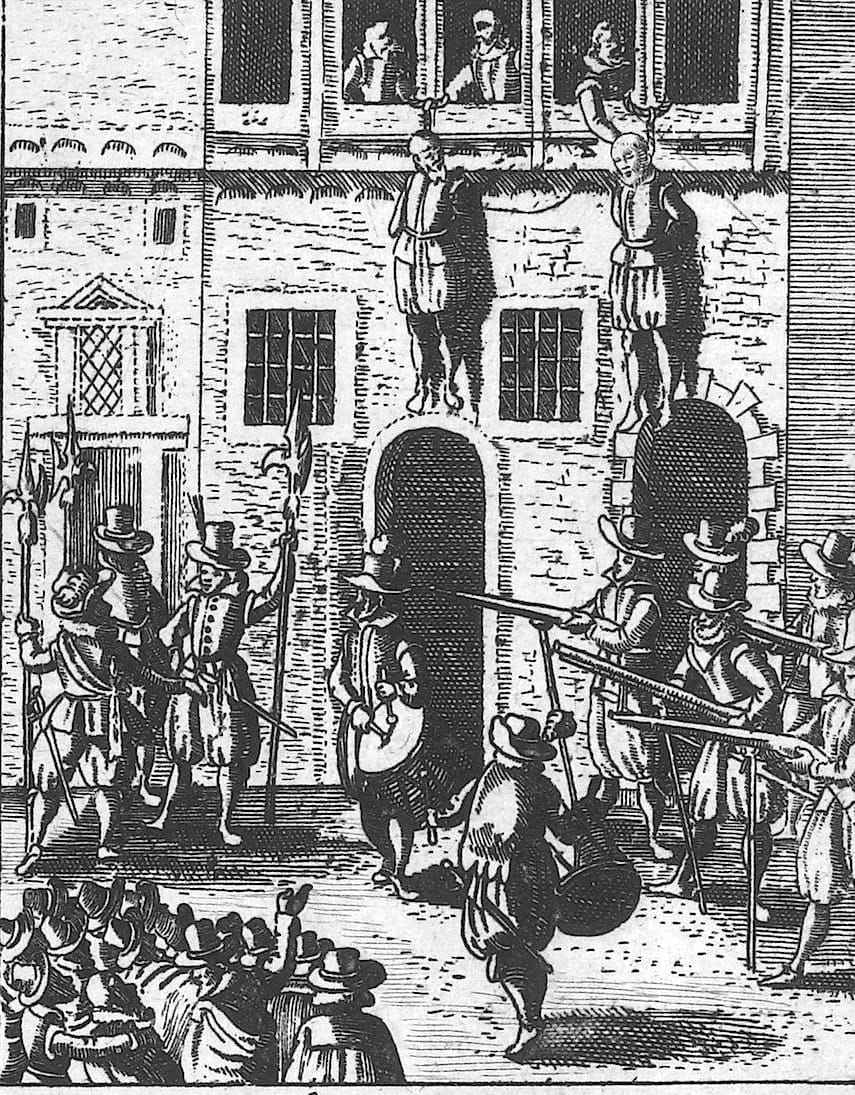
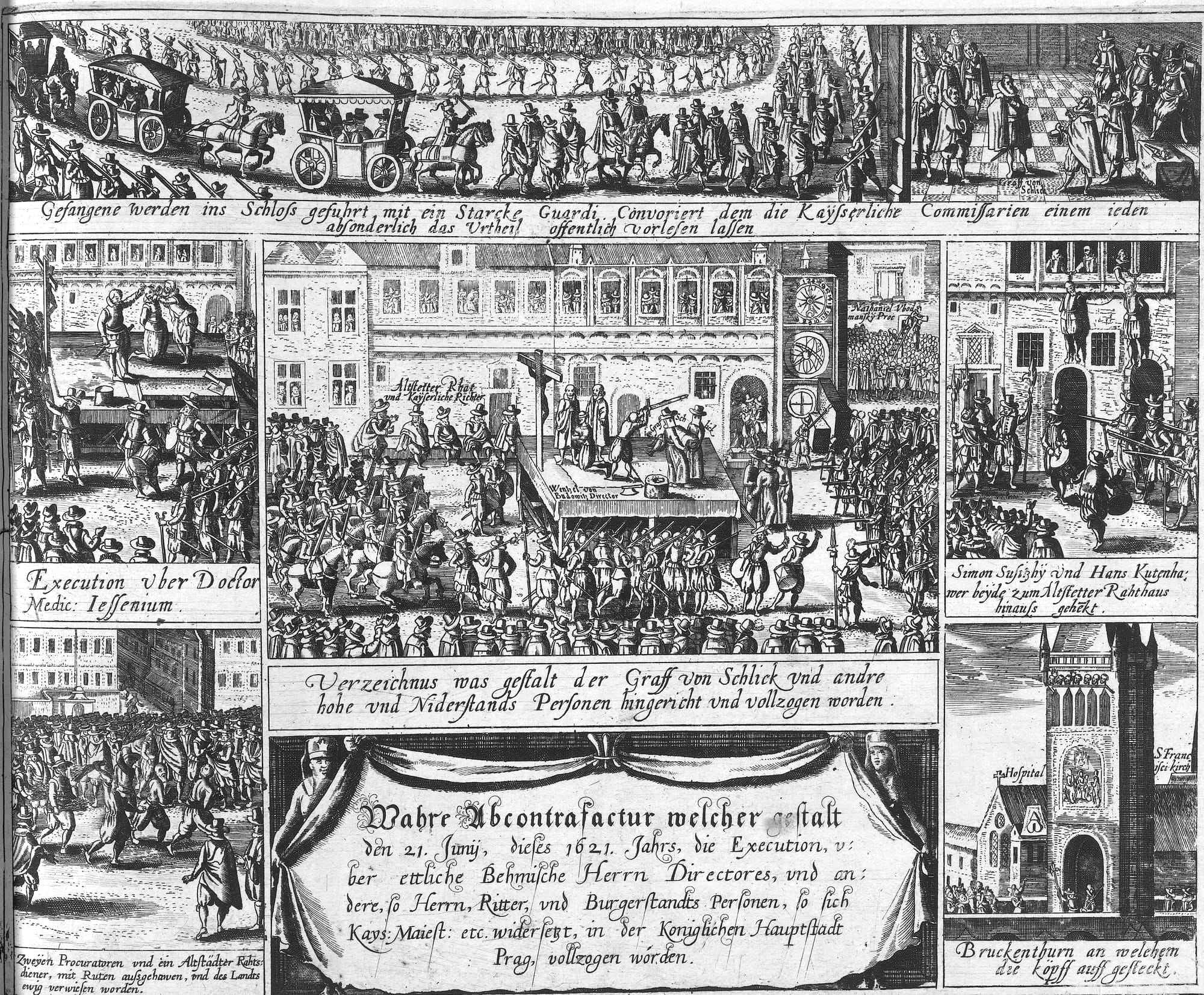
Most died by the sword. Some had a hand cut off first. Jan Jesenius, physician and rector of the university, had his tongue cut out. Three burghers were hanged instead, the more shameful death. It was about ten when it was over.
Afterwards
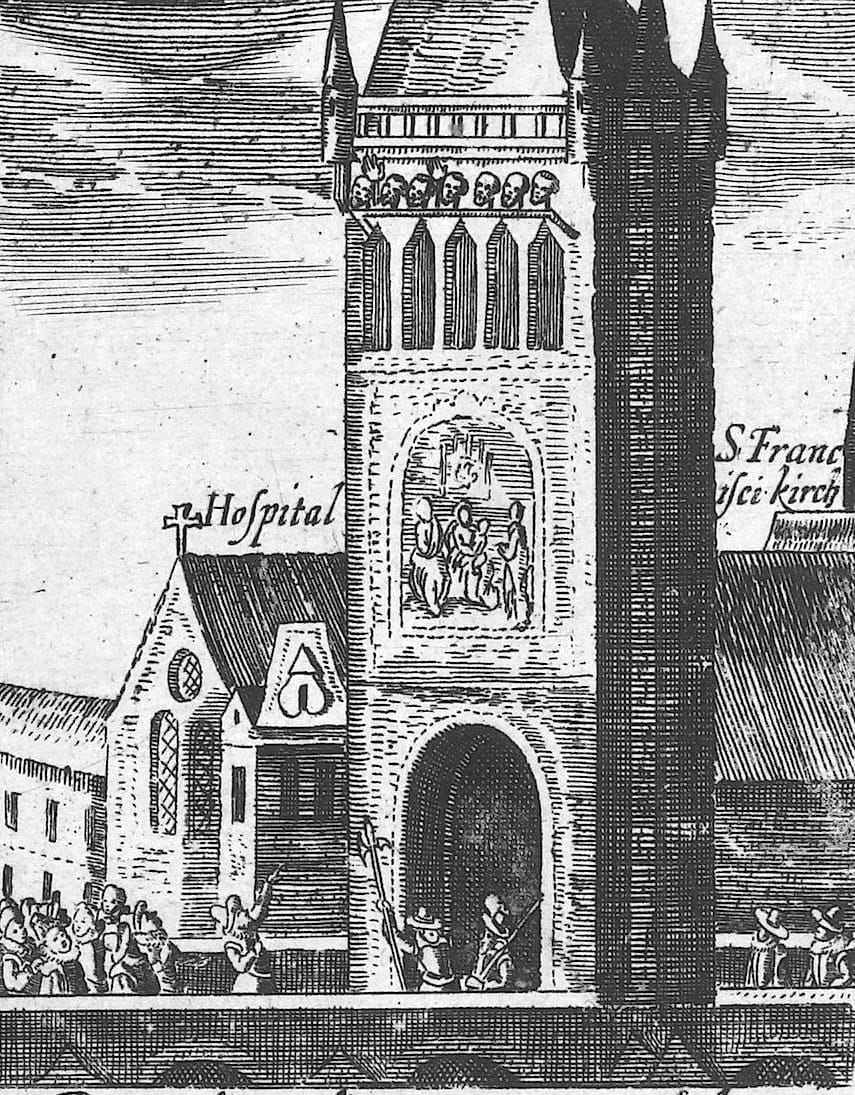
Twelve heads were put up in iron baskets on the Old Town Bridge Tower, where everyone crossing the river would pass them. Most hung there for ten years. In 1627 the Renewed Land Ordinance made Catholicism the only faith allowed in Bohemia, and thousands of Protestant families left the country rather than convert.
How to read the print
The picture on this page is the middle scene of a news sheet printed in 1621, within weeks of the execution. Its engraver wrote names into the picture, so we know the seated men are the council and the emperor’s judges, and that the man under the sword is Count Schlick. The home page walks through it letter by letter.